High-Light
Our clients were keen to improve the bedrooms at the back of their Edwardian home. These weren’t large and they suffered under the low, sloping roofs particular to these houses. They were cramped, with small, low windows to the garden.
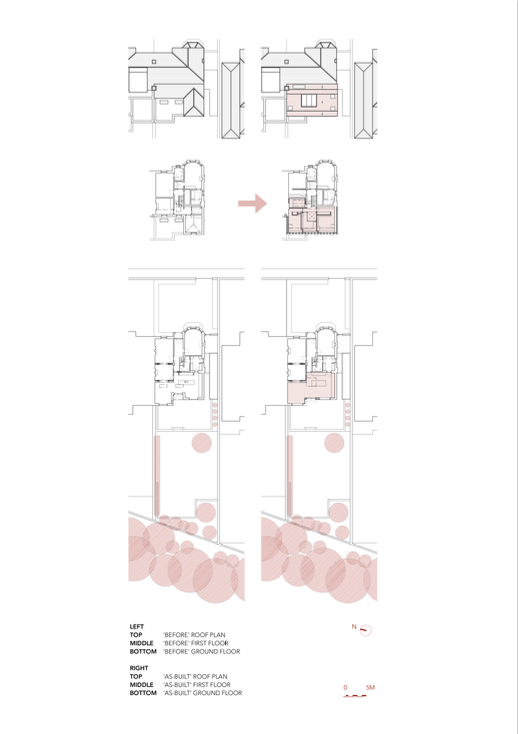
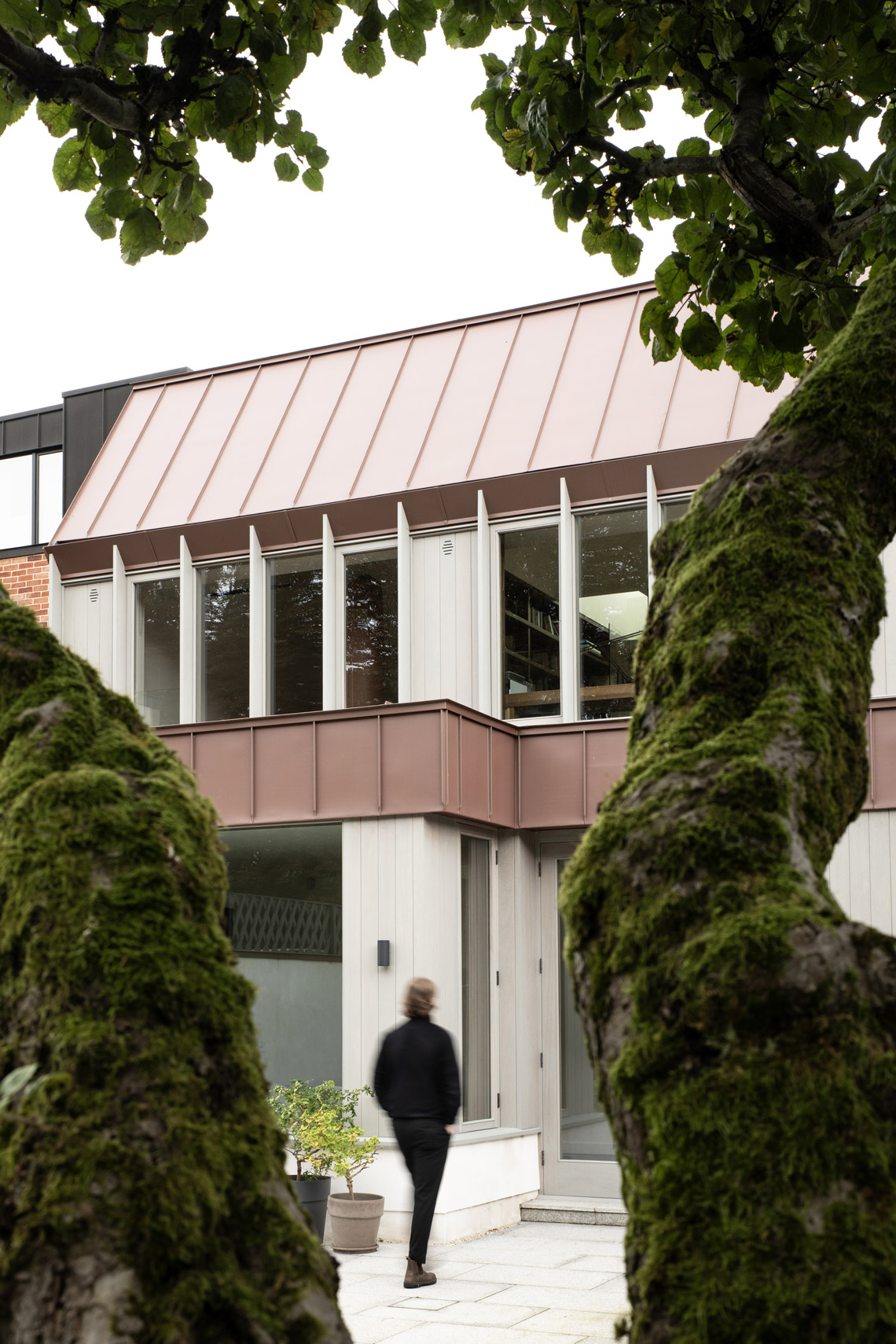
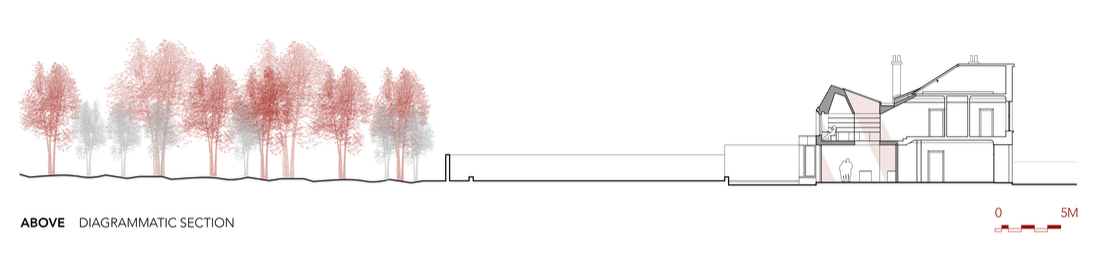
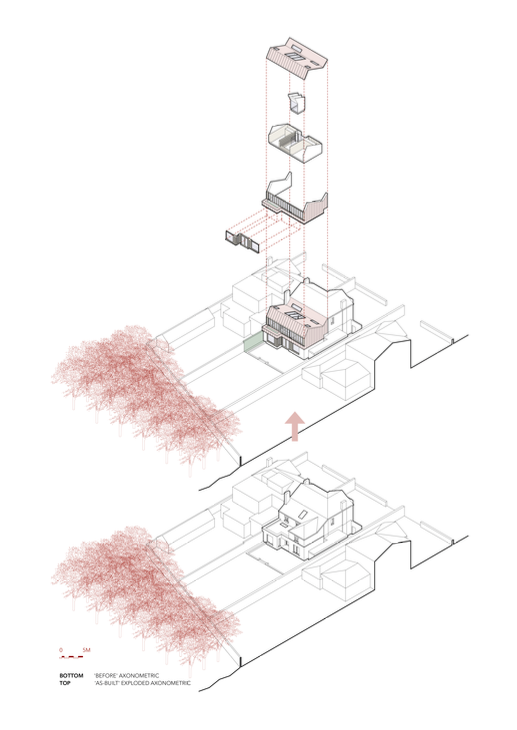
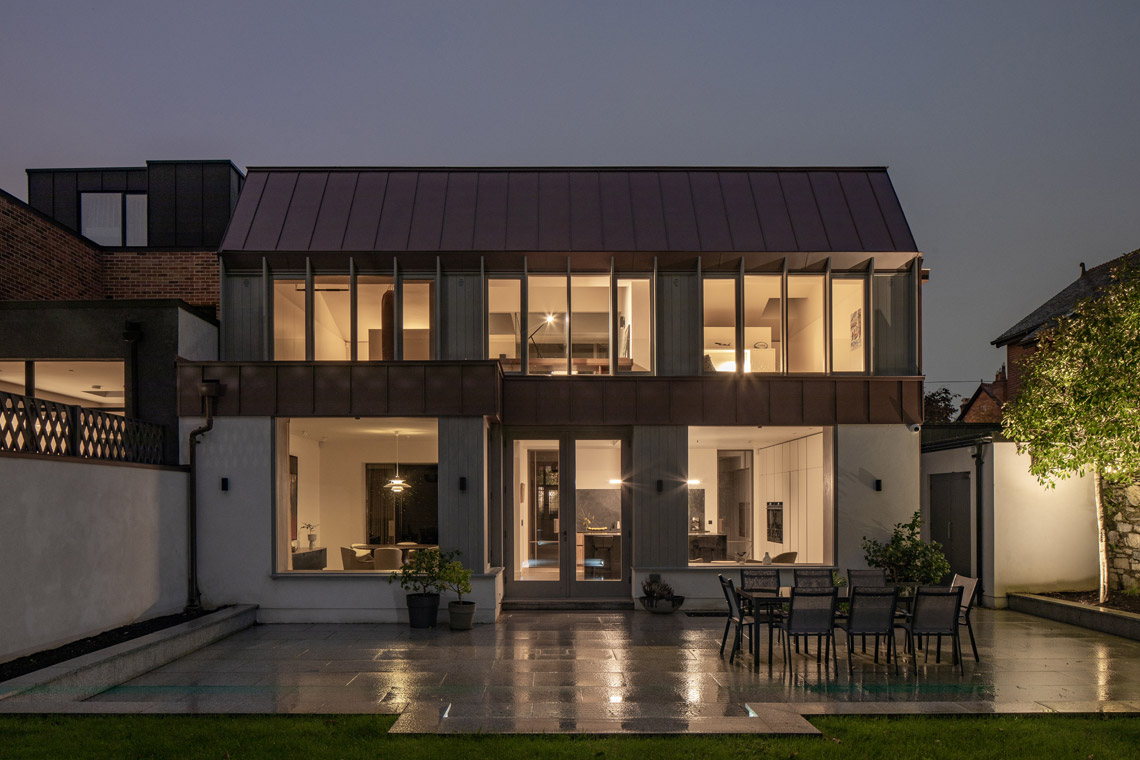
We extended over part of the ground floor flat roof. The new works were capped with an asymmetrical, sloping zinc roof; the colour tying in with the existing brickwork. The form provides voluminous space, while respecting the scale of the original house and not oversailing the ridge.
The clients – one an enthusiastic birdwatcher – were keen to maximise views, in particular towards a copse of trees beyond the garden. Respecting the amenity of neighbours, and avoiding large panels of glass, was important. The narrow, deep timber fins on the facade provide a careful rhythm, subdividing it symmetrically, and masking slight deviations in plan.
Over the course of the project the scope expanded; what had been designed as a discreet and independent first floor remodel became a more thorough reconsideration of the ground floor below.
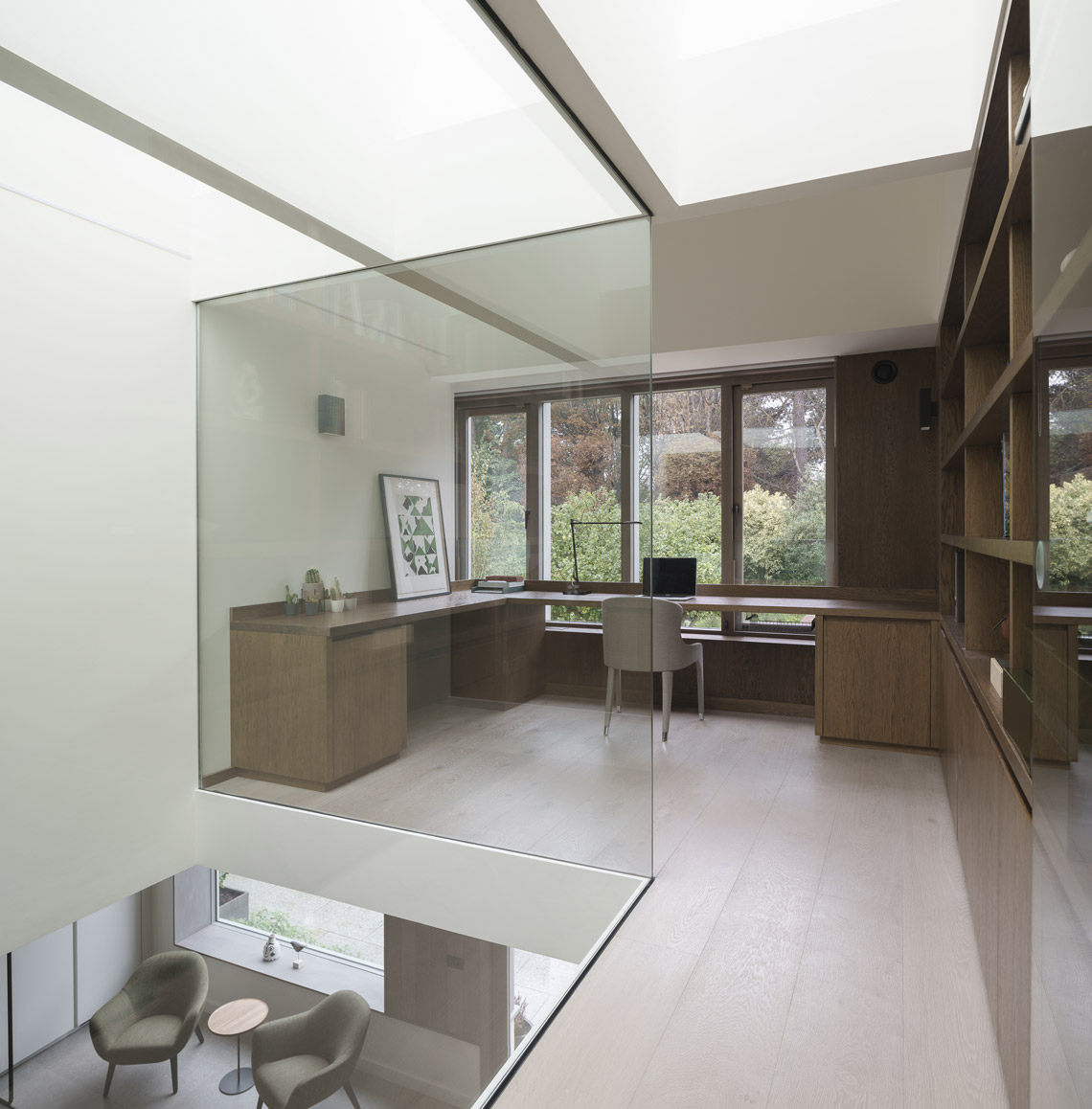
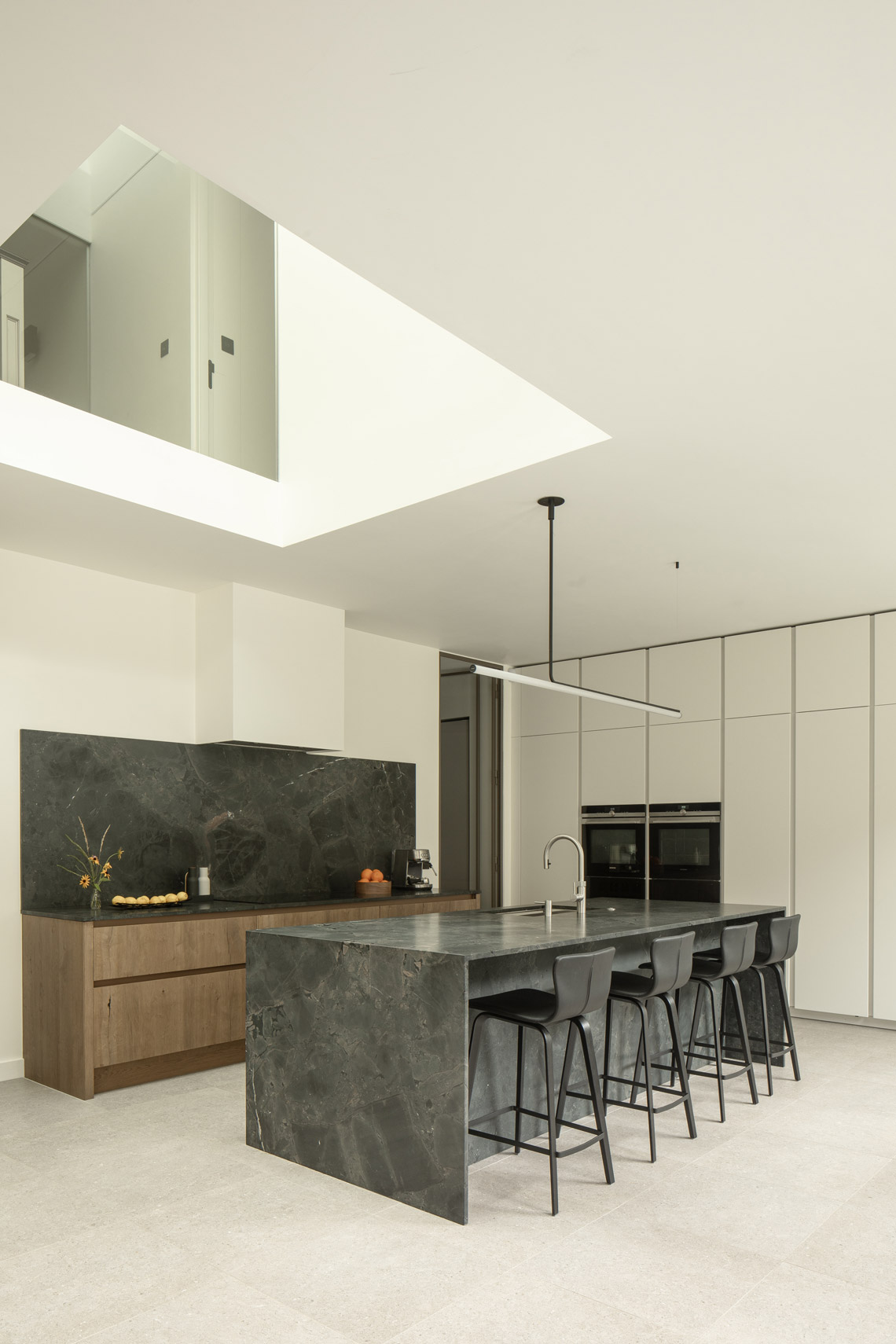
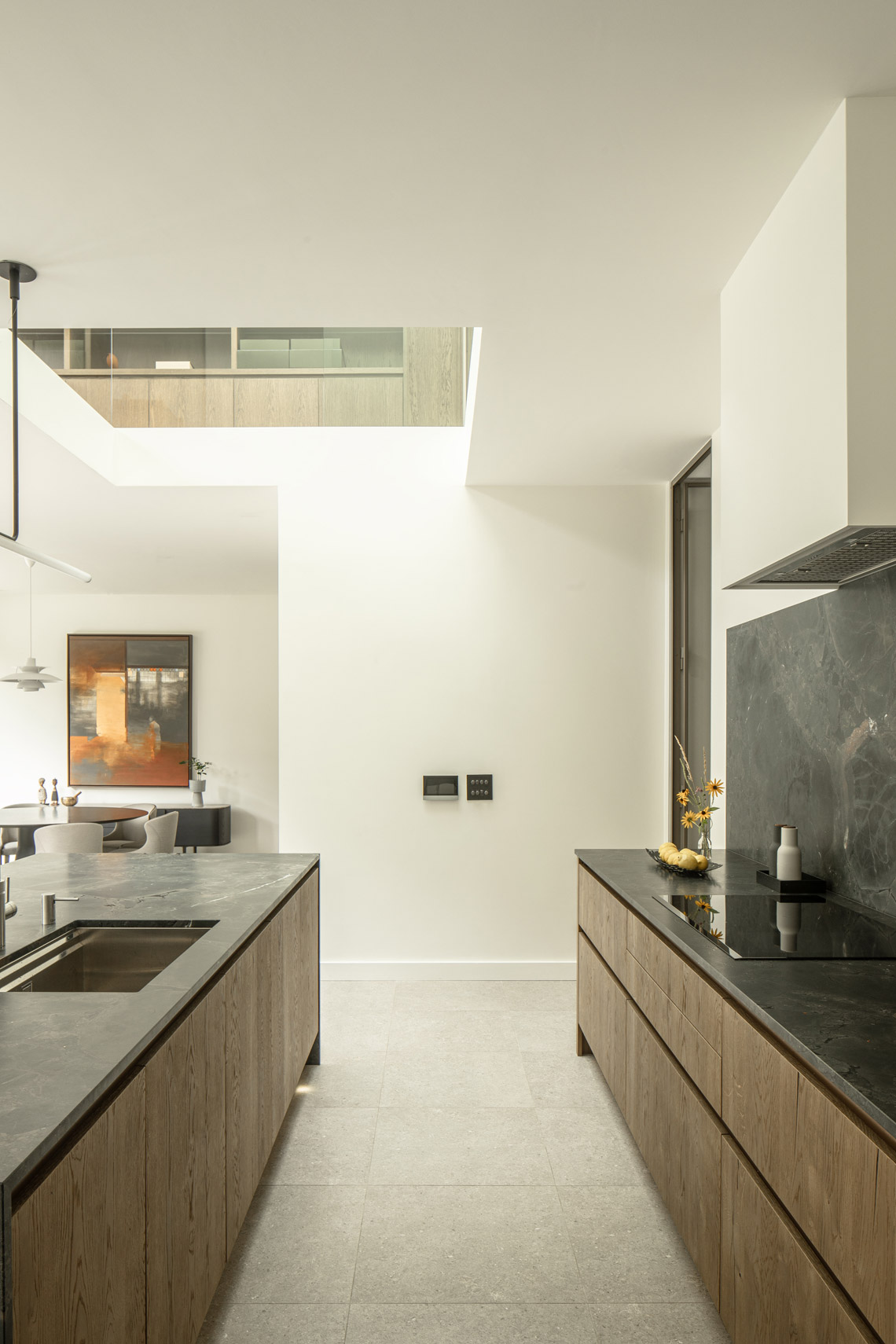
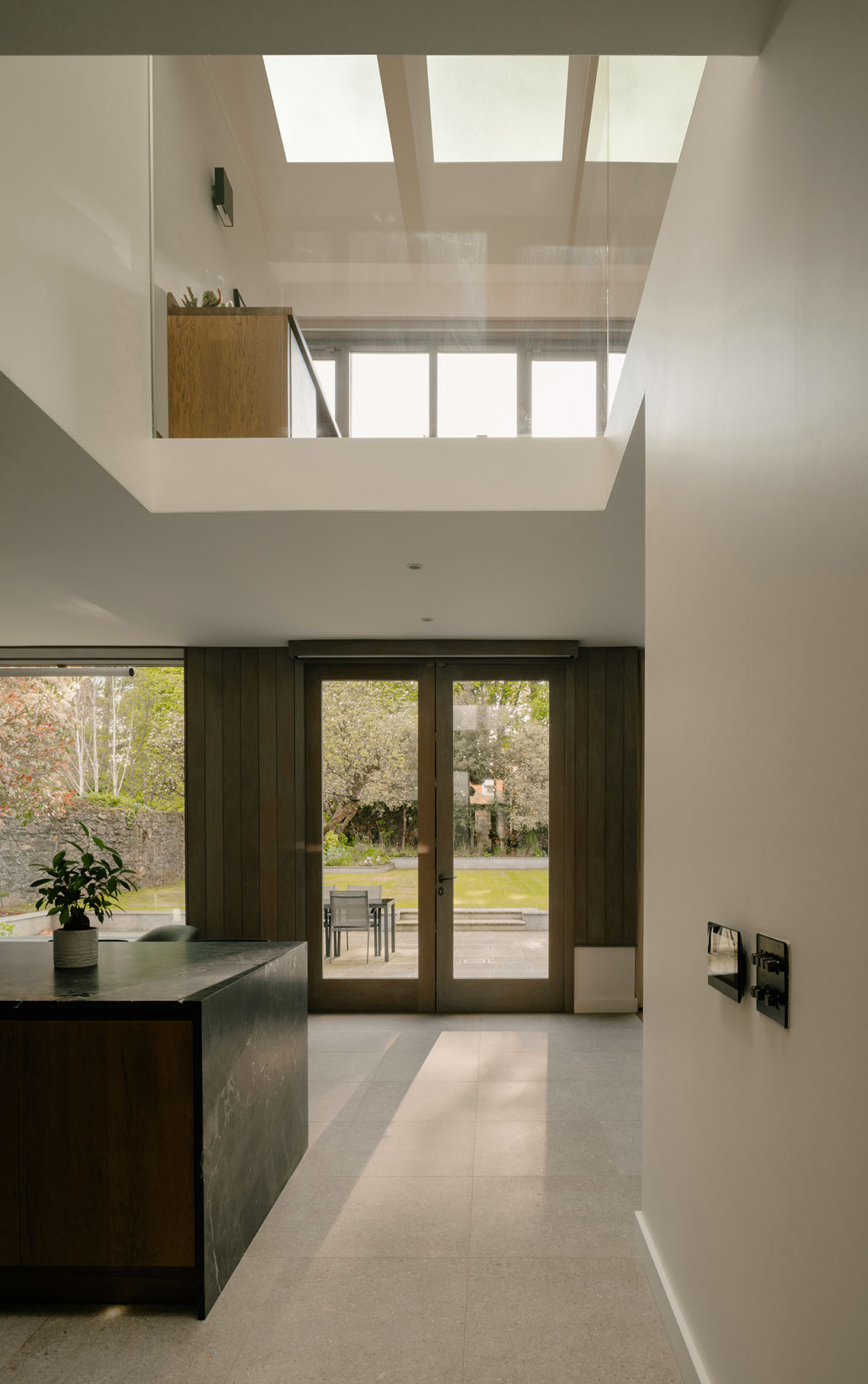
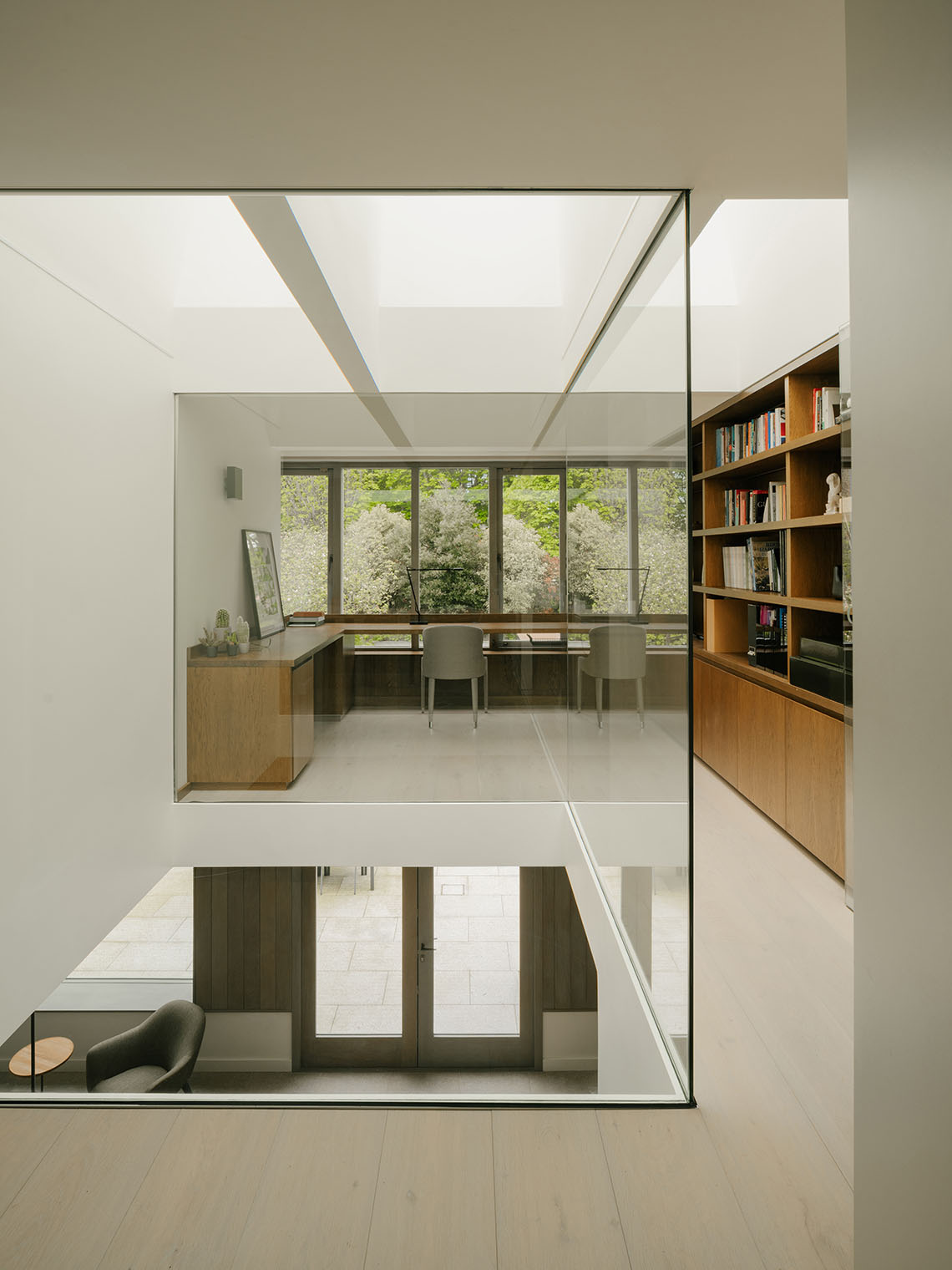
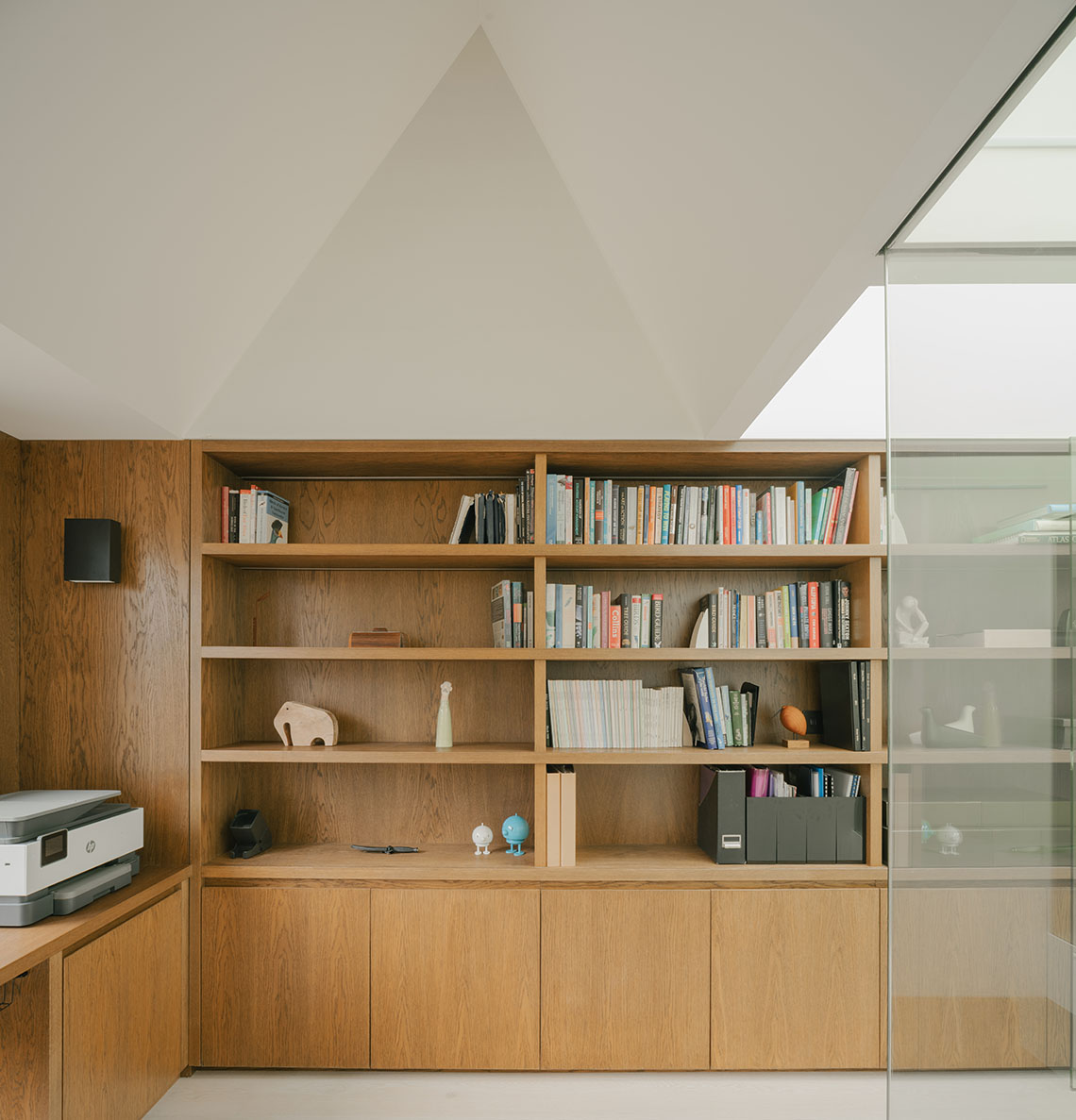
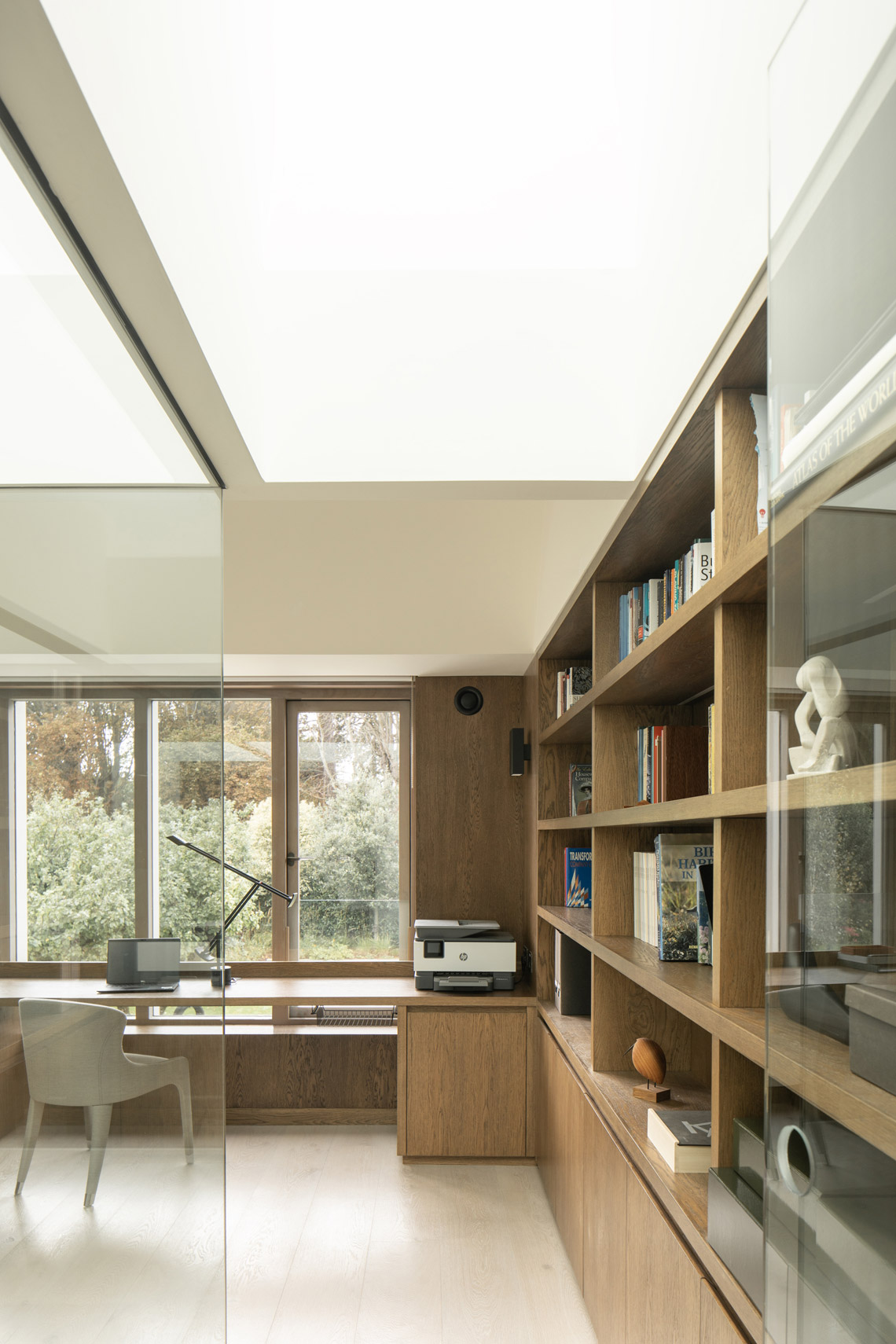
Internal lighting studies were undertaken. The double-height void links the kitchen-dining room to the first floor, capped by roof-lights. This increases light to the ground floor, especially required as a rooflight was being removed. It also provides visual connections to the new home office, and increases volume and height.
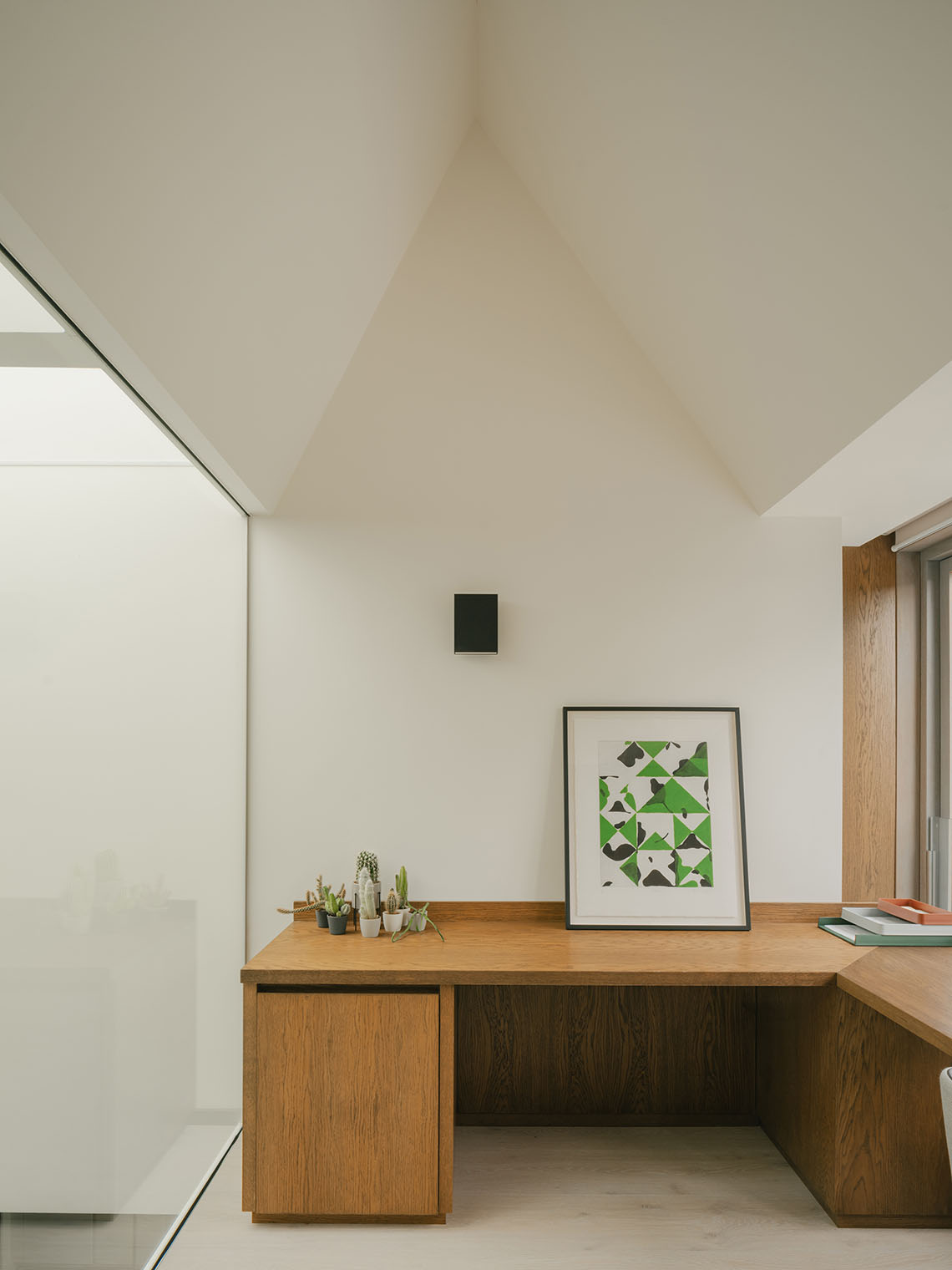
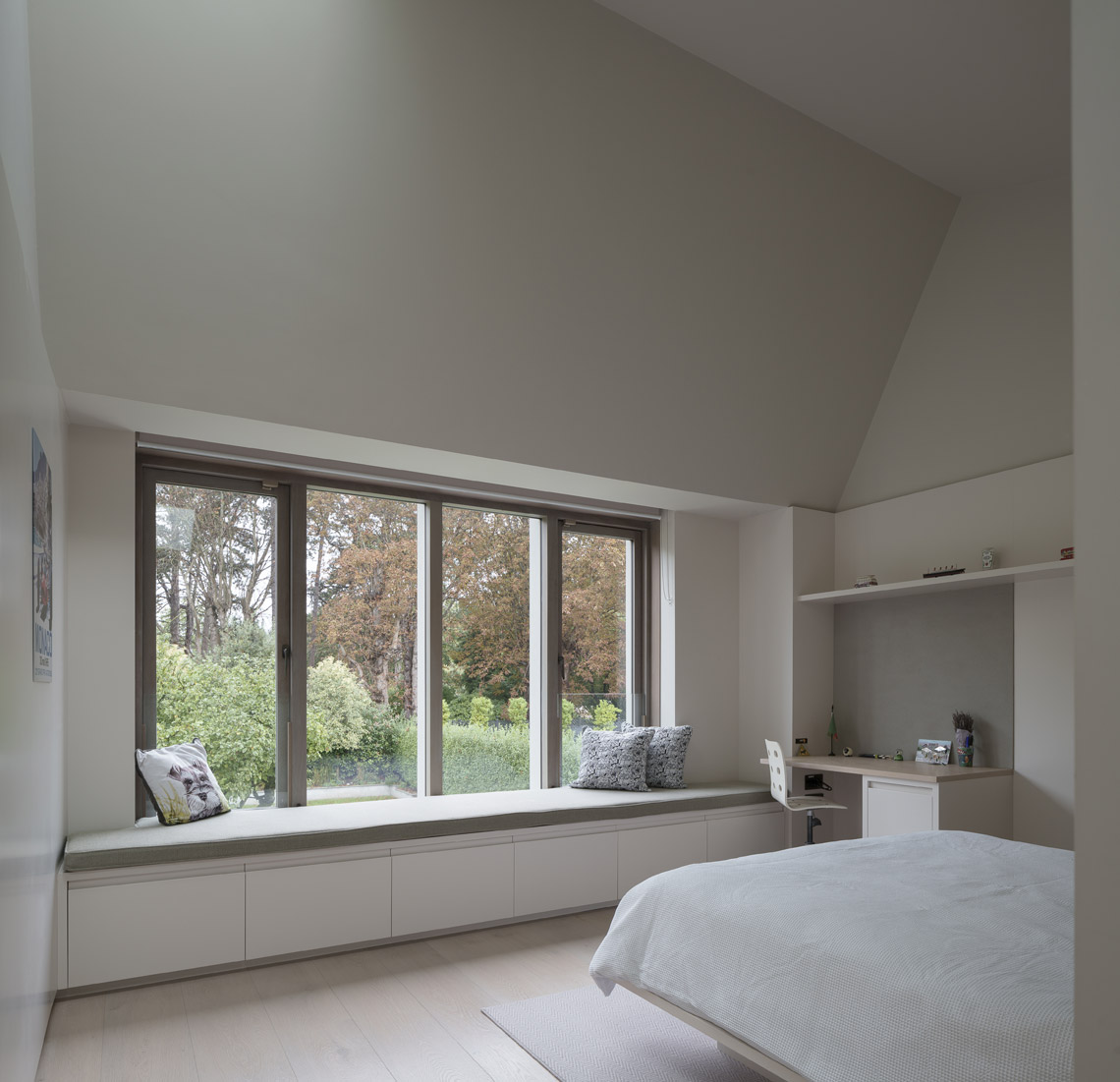
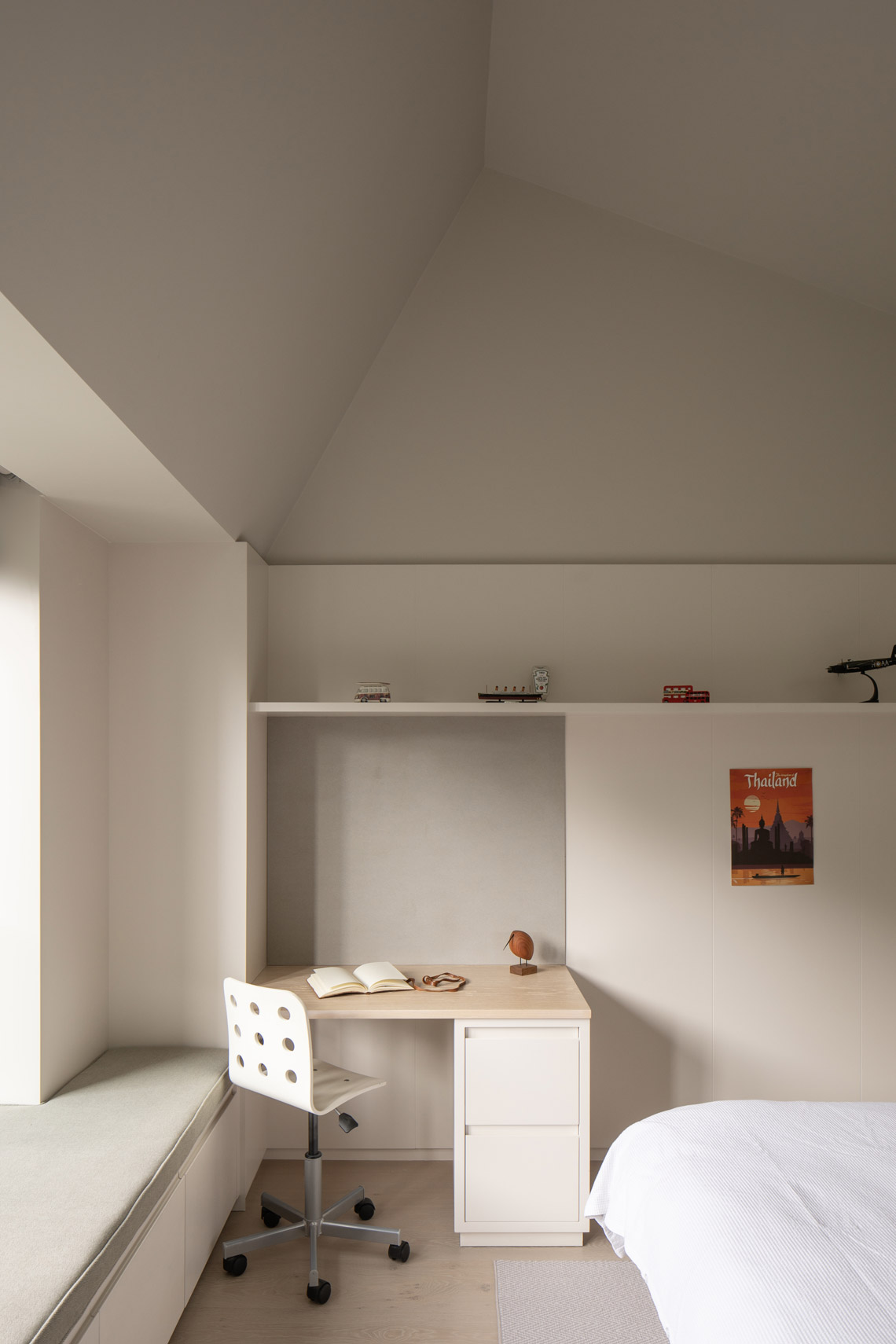
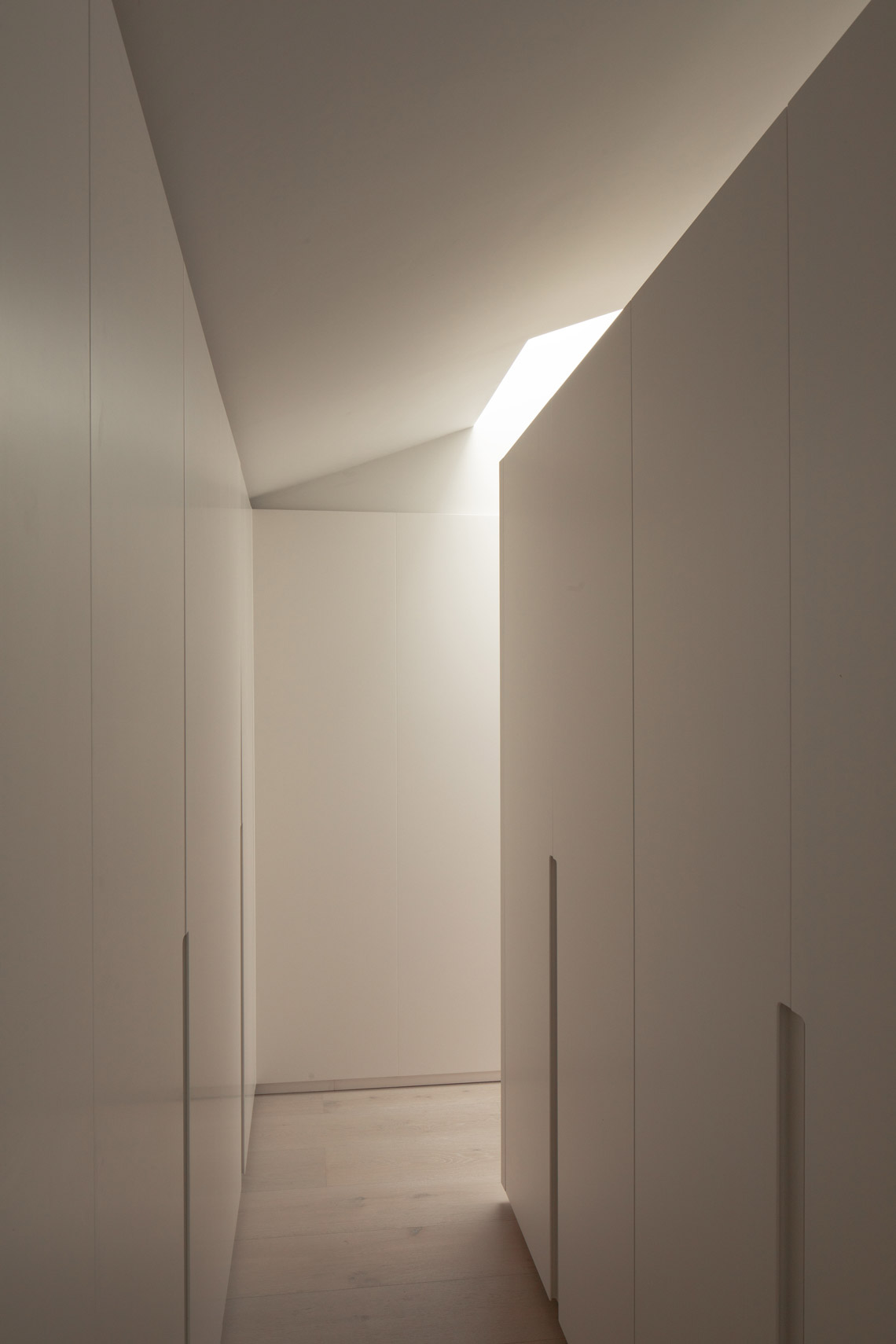
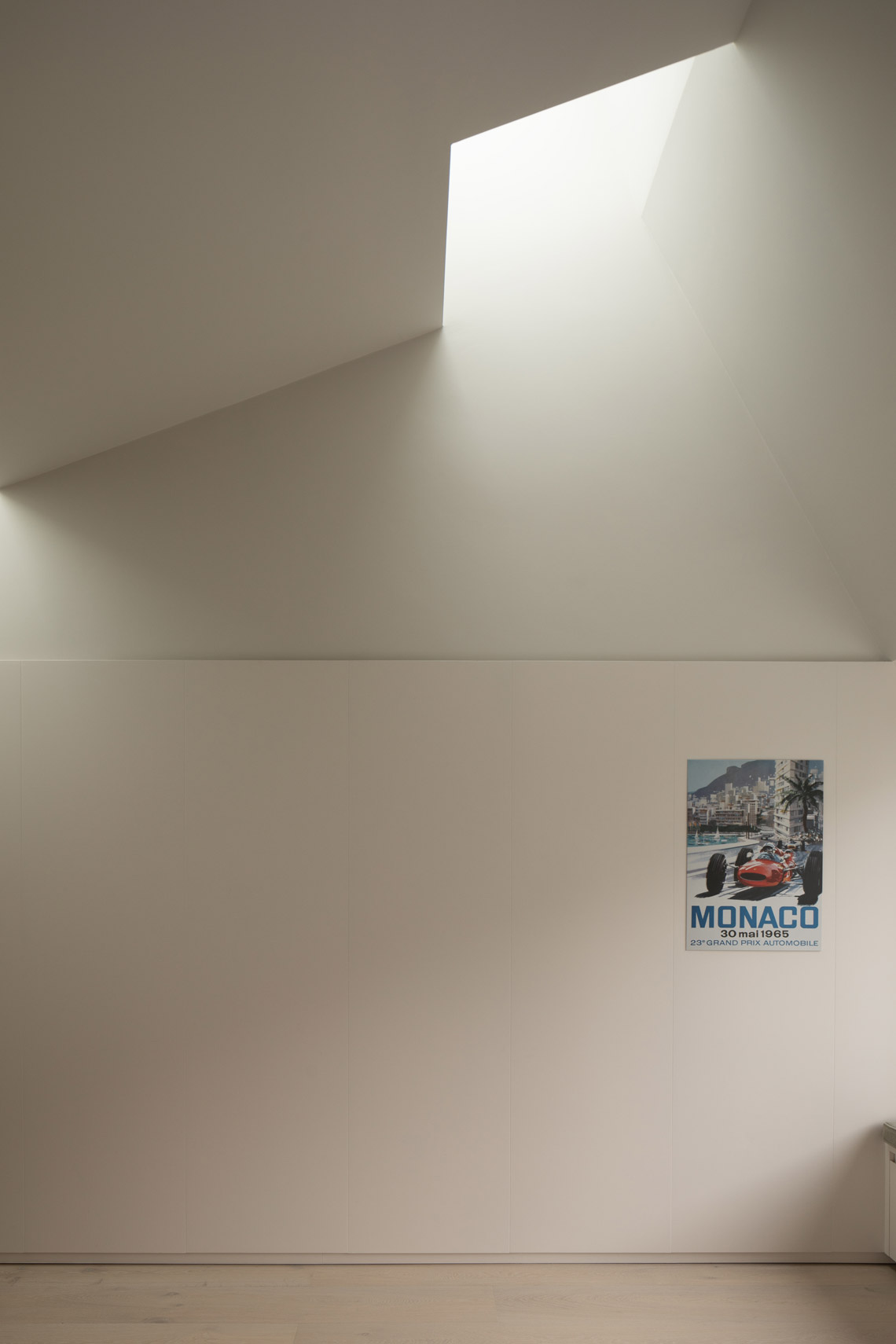
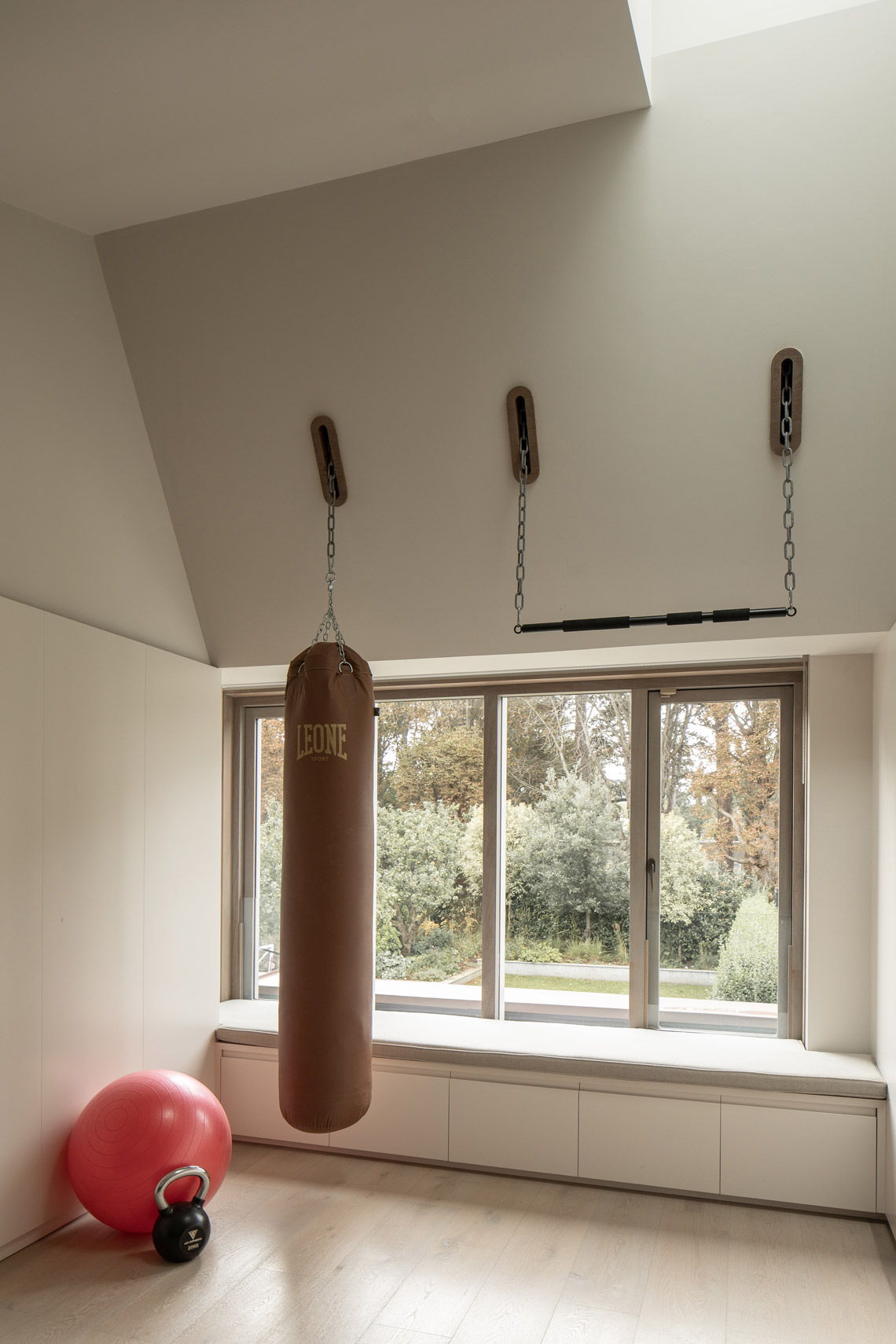
A bedroom and a second guest bedroom / gym were provided on either side of the office. A horizontal datum focuses views towards the trees and horizon. Above, ceilings slope to create interesting volumes, with discreet roof-lighting at corners. Interiors are lined with panelling and built-in joinery. Windows are brought down to seat level. The main bedroom was designed to provide a calm, safe, sensory environment; a retreat for a family member.
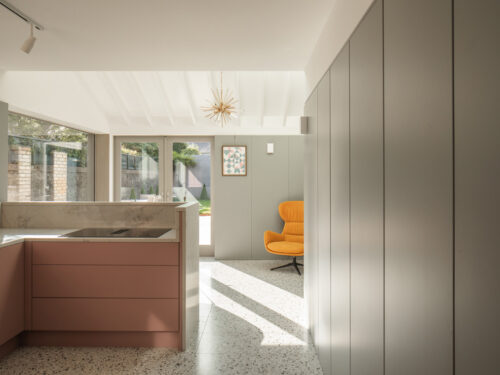
Downstairs, openings to the garden were enlarged and brought up to a raised ceiling. The porch was closed in; window reveals provide depth for seating. Internal door openings were also raised.
There was no impact on drainage as the existing flat roof was built over. The small area of roof that remained was upgraded with sedum. Rainwater was re-routed to discharge into this and to a garden planter. The adjacent garden wall was raised and sustains a green wall.
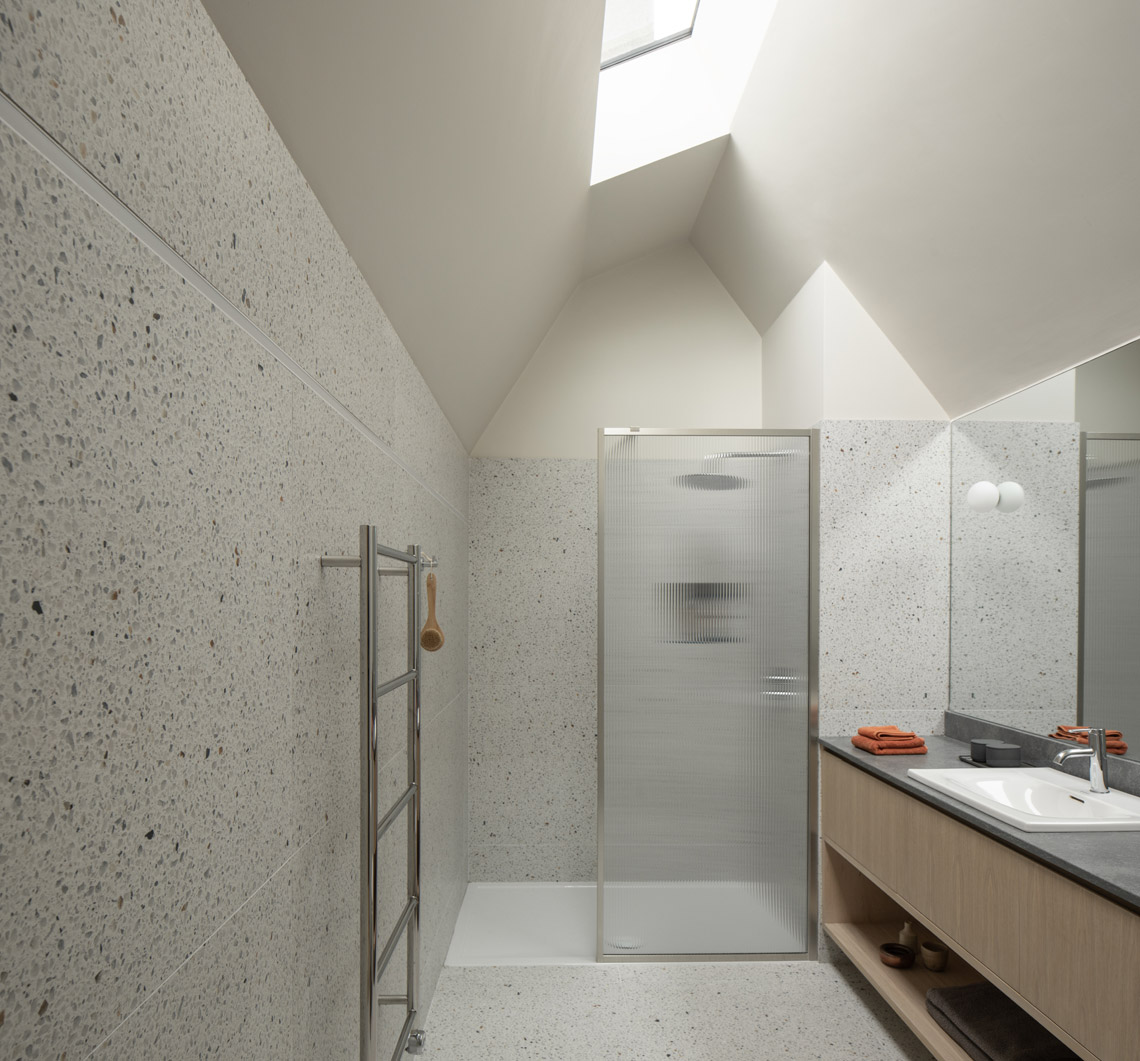
Reduced operating energy M&E systems benefit comfort, health and well-being: natural ventilation with a motorised roof-light using the stack effect; full airtightness; solar water heating.
Client comments:
We asked our architect to redesign the rear extension of this beautiful period house. We sought a design that would both complement and contrast the period features of the original house. Specifically we required the house to become more proportioned with regards to ceiling heights and to make the most of the beautiful views of trees to the rear of the property with appropriately sized windows. We also hoped the transition between period and modern would flow with ease.
The architect fully understood the brief. But it was more than that as he had a vision with a strong design intent, that at times was tricky to fully appreciate until the spaces started to appear. Trust was fundamental. However, the outcome absolutely exceeded our expectations. This house has been given a new lease of life and now has a modern rear extension that does justice to the front period piece.
|
Project Details |
|
|---|---|
|
Location: |
High-Light |
|
Location: |
Dublin 6 |
|
Client: |
Private |
|
Architect: |
nineteeneighty studio |
|
Area: |
Additional 3.3 sqm. ground floor; additional 25.7 sqm. first floor |
|
Completion: |
January 2022 – July 2022 |
|
Main Contractor: |
P&J Construction |
|
Structural Engineer: |
Niamh O’Reilly, Niamh O’Reilly Structural Engineering Ltd. |
|
Interior Architect: |
Elizabeth Kirby, Elizabeth Kirby Designers |
|
Photography: |
Peter Molloy; Donal Murphy |